Holiday decor fire safety
Published on November 20, 2025
As you deck your halls, take steps to keep your festive decorations from becoming a fire hazard.
Holiday lights
Nearly one-third of home Christmas tree fires are caused by electrical issues.* This includes problems with lighting and other electrical decorations, which can pose significant risks if not properly maintained or used.
- Using decorations that are flame-resistant or flame-retardant can reduce the risk.
- Inspect string lights every year before use, and recycle them if they are worn or broken.
- Follow all the manufacturer’s recommendations.
- There is a difference between indoor and outdoor lights. Indoor lights are not intended for outdoor use, and vice versa.
- Use clips made for hanging lights — not staples or nails, which could damage the cord.
Live Christmas trees
Although Christmas tree fires are not common, they are more likely to be serious when they occur.
- Choose a tree with fresh-looking green needles. Touch it to ensure needles don’t easily fall off.
- Place the tree a minimum of 3 feet from any heat source (candles, heat vents, lights, etc.)
- Water the tree daily. Fresh trees dry out extremely quickly.
Candles
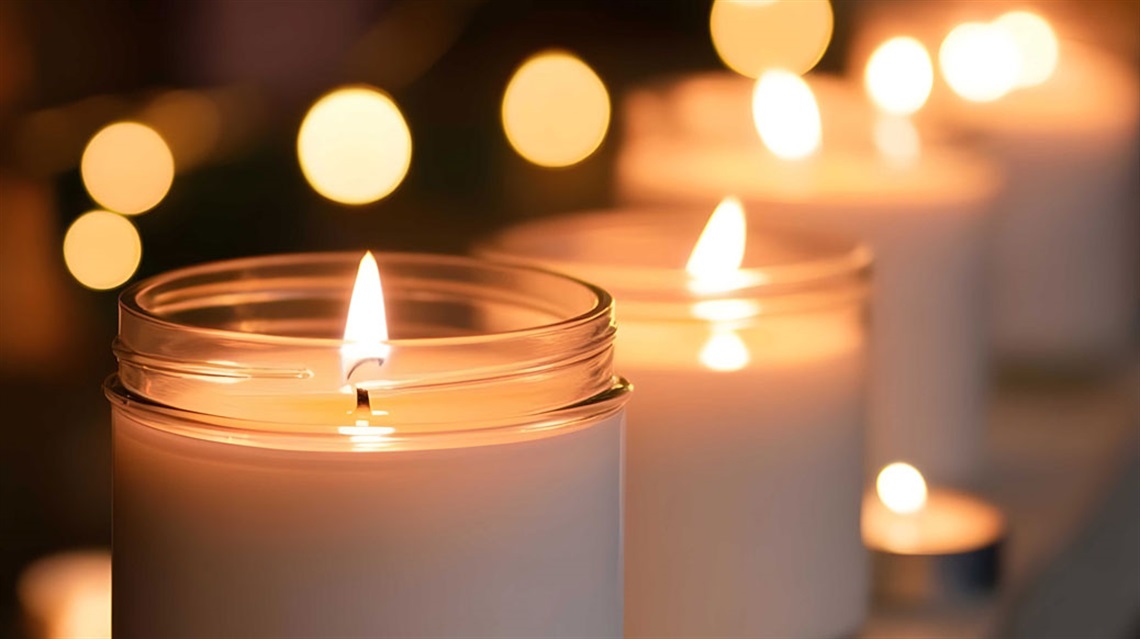
December sees the highest number of candle-related fires.* Consider using battery-operated flameless candles, which are a safe alternative. If you prefer the ambience and scent of real candles, you can take simple steps to minimize the risk of a fire.
- Trim the candle wick to ¼ inch before lighting to prevent the flame from getting too tall.
- Only use candles holders that are sturdy and won’t tip over easily.
- Keep candles at least 12 inches away from anything that can catch on fire such as furniture, curtains or decorations.
- Blow out candles when you go to bed or leave the room.
Fireplaces
Nothing feels quite as inviting as a crackling fire in the fireplace during the holiday season. However, to ensure that your family remains safe and your home stays secure, it’s important to follow these essential fireplace safety recommendations.
- Have a professional clean and inspect your chimney once a year.
- Put the fire out before you leave your home or go to sleep.
- Put ashes in a lidded metal container. Keep the container outside and at least 10 feet from your home for several days before emptying the container.
Cooking
Thanksgiving, Christmas Eve and Christmas Day are the peak days for home fires caused by cooking.*
- Ensure your smoke alarms are working.
- Stay in the kitchen when cooking on the stove.
- Keep a 3-foot “no kid/no pet zone” around the oven.
If frying a turkey, use an electric, infrared or air fryer. If you choose to use a traditional oil fryer:
- Make sure the turkey is completely thawed before placing it in the fryer.
- Only fill the fryer to the appropriate level with oil.
- Only use the fryer outside away from anything that can catch fire.
Battery-powered gifts and toys
Many tech gifts such as phones, laptops and drones use rechargeable lithium-ion batteries. So do popular children’s toys, like remote-controlled cars and airplanes and ride-on toys including scooters, e-bikes and cars.
While these batteries are conveniently rechargeable, they come with some fire risks.
- If you notice the battery has an unusual odor, changes in shape, or appears to be leaking, move the item away from flammable materials (if it is safe to do so) and call 911 immediately.
- Make sure items that use lithium-ion batteries are listed by a qualified testing laboratory and follow all the manufacturer’s recommendations.
- Only use the battery and charger that is made for the device.
- Once it is fully charged, unplug it to avoid damage that could cause the battery to catch fire or explode.
- Avoid storing these items in extreme temperatures (below freezing or above 105° F).
- When it’s time to dispose of these batteries, recycle them instead of throwing them in the trash. Many home improvement or electric retailers will accept them.
* Statistics from the National Fire Protection Association